Basic checkmates in chess: how to mate with two rooks, a queen or a rook
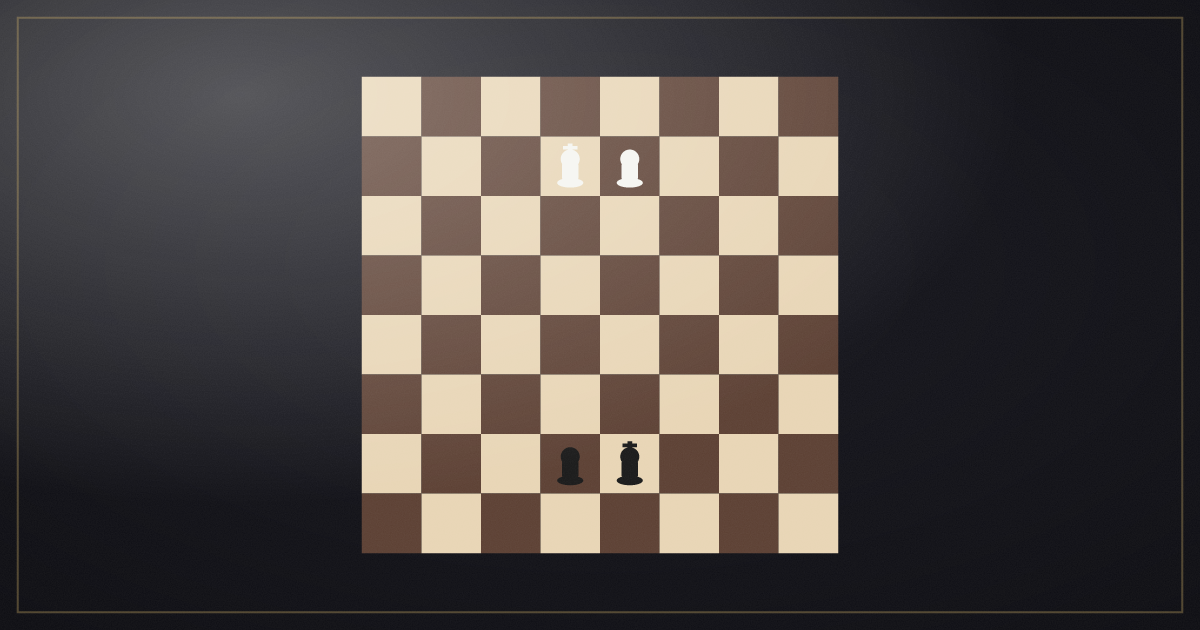
Your opponent being down to a bare king doesn't mean you've won; if you don't know how to deliver checkmate, you can slip into a draw by stalemate or the fifty-move rule. This guide walks you step by step through the three basic checkmates every player should know: two rooks, queen and king, and rook and king.
In short
- All three basic mates share the same goal: drive the enemy king to the edge of the board and mate it there.
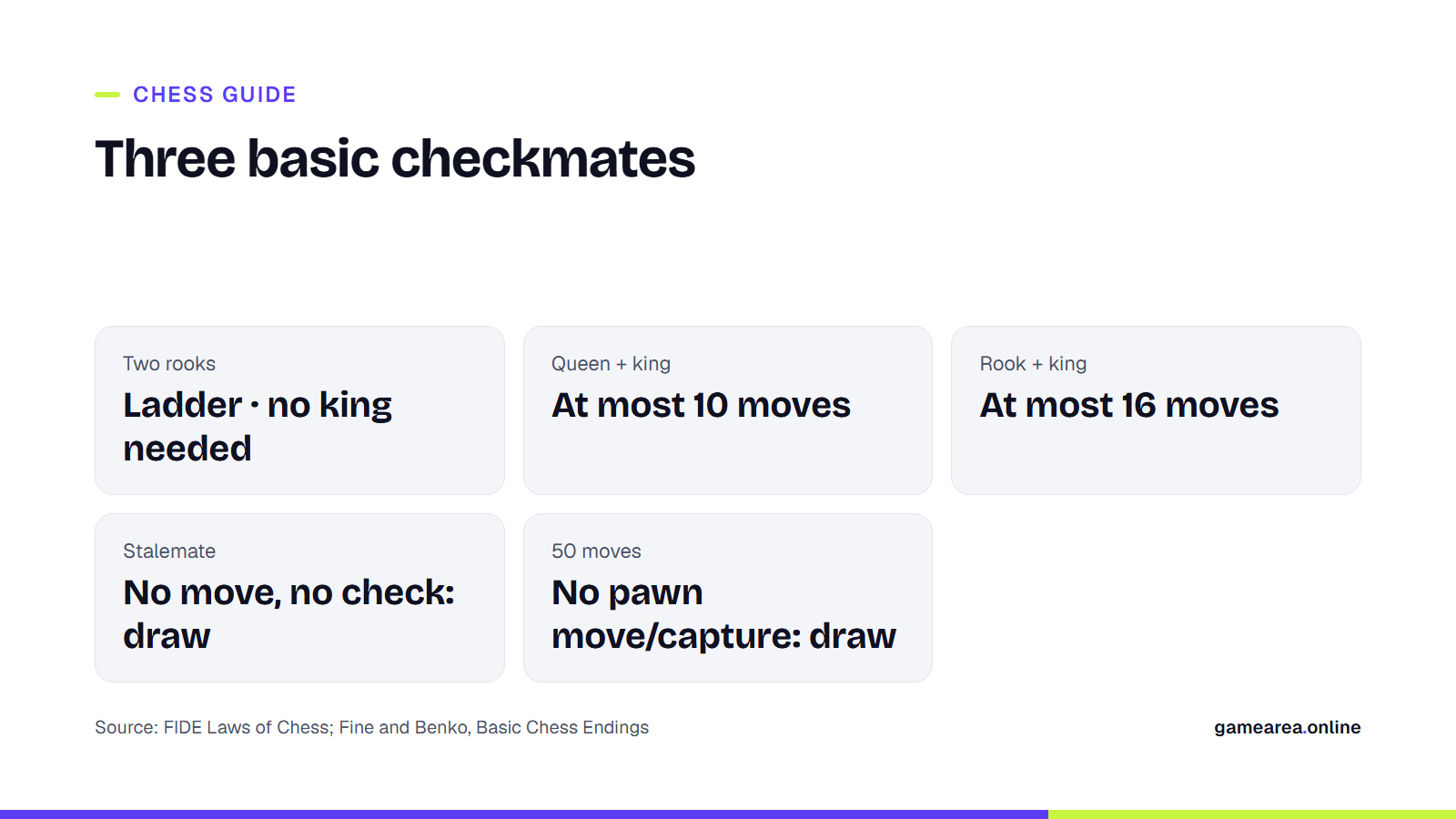
- Mate with two rooks needs no help from your king; the rooks take turns like a ladder, and it's the easiest of the three.
- Queen and king mate in at most 10 moves from any starting position, rook and king in at most 16.
- The biggest danger is stalemate: the enemy king has no legal move but isn't in check, and the game ends in a draw.
Why do the basic mates matter?
Winning material in an endgame isn't enough; you have to convert that advantage into checkmate. Under the FIDE Laws of Chess, if the player to move has no legal move and their king is not in check, the game is stalemate and ends immediately in a draw. In addition, if the last 50 moves by each side have been made without any pawn move and without any capture, a player can claim a draw. In other words, not knowing the basic mates can turn won games into draws.
You can practice the techniques in this article against the bot at the GAMEAREA Chess table. If you're new to chess, start with our rules and first moves guide.
How do you checkmate with two rooks?
Two rooks can deliver mate without any help from your king. The method works like a ladder: one rook cuts off the rank (or file) the enemy king is on, drawing a line it can't cross, while the other gives check from the next rank. The king is forced to step back one rank. Then the rear rook moves ahead and gives check from the new rank. Taking turns, the rooks push the king all the way to the edge; on the last rank, the king has no square to escape the check.
The only thing to watch is that your rooks don't stay close to the enemy king. If the king approaches a rook, move that rook far away to the other side of the board and continue the ladder from there.
How do you checkmate with queen and king?
The queen can't mate on her own; she needs your king's help. The method has two stages:
- Shrink the box. Place your queen a knight's move away from the enemy king. Wherever the enemy king goes, follow it with the queen, keeping that same relationship. The area the king can move in shrinks with every move until it's trapped on the edge.
- Bring in your king and mate. While the enemy king shuffles between two squares on the edge, march your own king closer. Once your king is in position to protect your queen, give check with the queen in front of or beside the enemy king to deliver mate.
This is where the danger of stalemate shows up most. Once the enemy king is trapped in a corner or on the edge, a queen move that isn't a check can leave it with no squares at all. Before every move, check that the enemy king has at least one square to go to. Played correctly, queen and king mate in at most 10 moves from any starting position.
How do you checkmate with rook and king?
Mate with a rook takes longer, because a rook controls far fewer squares than a queen. The logic is still to shrink the box:
- Use the rook to cut off the enemy king's area with a line, confining it to one part of the board.
- Bring your king toward the enemy king. When the two kings stand in opposition (on the same rank or file with one square between them), give check with the rook. The enemy king has to step back one rank, and your rook now cuts off that rank.
- Repeat these steps to push the king to the edge. With the kings in opposition, a rook check along the edge is mate.
If the enemy king attacks your rook, move the rook to a distant square on the same line; don't give up the line. Sometimes you need a single "waiting" move with the rook so that your opponent is forced into the opposition. Rook and king mate in at most 16 moves from any starting position, well within the 50-move limit.
| Mate | King's help | Maximum moves | Key idea |
|---|---|---|---|
| Two rooks | Not needed | Short | Ladder: the rooks take turns giving check |
| Queen and king | Needed | 10 | Shrink the box from a knight's move away; watch for stalemate |
| Rook and king | Needed | 16 | Cut off with a line; advance it when the kings are in opposition |
| Maximum moves: with the mating side to move and best play by both sides. Source: Fine and Benko, Basic Chess Endings (via the Wikipedia article "Checkmate"). | |||
Frequently asked questions
Can you checkmate with just a king and queen?
Yes. Queen and king can mate a lone king in at most 10 moves from any position.
What is stalemate?
If the player to move has no legal move and their king is not in check, the game is stalemate and ends in a draw.
How many moves does mate with a rook take?
Played correctly, at most 16 moves from any starting position.
What is the fifty-move rule?
If the last 50 moves by each side have been made without any pawn move and without any capture, a player can claim a draw.
Sources
- GAMEAREA — Satranç Oyna Official source
- FIDE — FIDE Laws of Chess Official source
- Wikipedia — Checkmate
How this content was prepared
Prepared with AI assistance from the sources listed, key facts checked against official sources, not copied verbatim. Our AI principles
GAMEAREA Editörlüğü