Chess pawn structures: how isolated, doubled, backward and passed pawns shape your middlegame plan
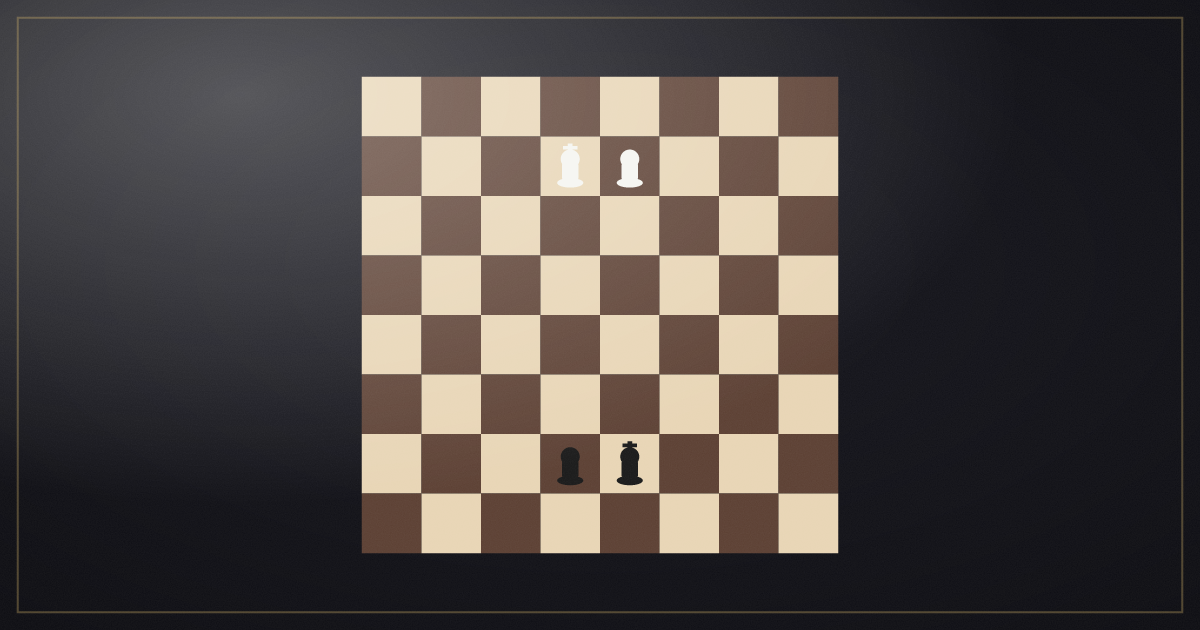
In chess, pieces can change places in a few moves, but pawns can never go back. That makes the pawn structure the most permanent factor on the board: it decides which wing you play on in the middlegame, where your pieces belong and how you head into the endgame.
In short
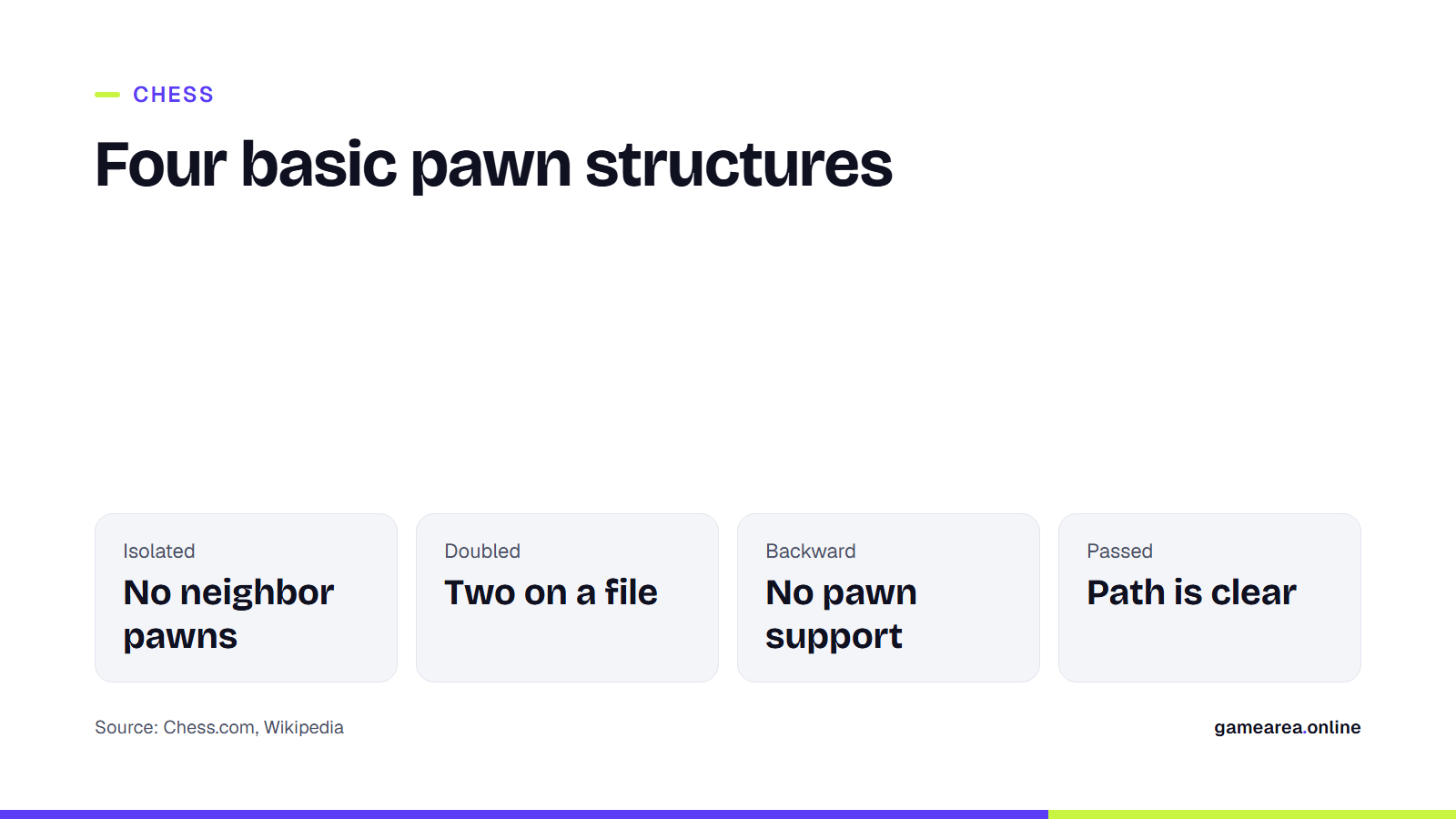
- An isolated pawn has no friendly pawns on the adjacent files; it brings activity in the middlegame but often becomes a target in the endgame.
- Doubled pawns are two pawns stacked on the same file; because they cannot protect each other, they are usually a weakness.
- A backward pawn has fallen behind its neighbors and can no longer be protected by a pawn; the square in front of it is an ideal post for enemy pieces.
- A passed pawn has no enemy pawns in front of it or on the adjacent files; its value grows as the endgame approaches.
Why does pawn structure matter so much?
Under the FIDE rules a pawn can only move forward. That simple rule means every pawn move is permanent: once a pawn advances, it can never again guard the squares it has left behind. Badly placed pieces can be fixed in a few moves, but a weak pawn structure usually stays with you until the end of the game.
That is why experienced players look at the pawns first when they assess a position. Which files are open? Which squares can no longer be covered by any pawn? Which side has a pawn majority on one wing? The answers to these questions often show on their own which plan is the natural one.
Is an isolated pawn strong or weak?
The isolated pawn cuts both ways. The most common example is the isolated queen's pawn on the d-file. The side that has it usually enjoys more space and open files in the middlegame, and the advanced squares the pawn guards (e5 and c5 for White, for example) are strong outposts for knights. While the pieces are still on the board, the owner of the isolated pawn often gets chances to attack on the kingside.
Its weakness is that there is no neighboring pawn to protect it. The square directly in front of the pawn cannot be controlled by any pawn, so the opponent can stop it by planting a piece there, ideally a knight. As pieces are exchanged, the isolated pawn loses its activity and becomes an easy target in the endgame. The practical rule: if you have the isolated pawn, keep the pieces on and attack; if you are playing against it, control the square in front of it and trade pieces.
When do doubled and backward pawns become a problem?
Doubled pawns usually appear after a capture. Because they sit on the same file, they cannot protect each other and are hard to advance; even if you have a pawn majority on one wing in the endgame, doubled pawns make it harder to create a passed pawn from that majority. Still, not every pair of doubled pawns is bad: a file opened by the capture or extra control of the center can make up for the weakness.
A backward pawn is one that has been left behind because the friendly pawns on the neighboring files have advanced, and it can no longer be protected by a pawn. The real problem is less the pawn itself than the square in front of it, which becomes a permanent outpost for the opponent. If the backward pawn stands on a half-open file, the opponent can also double rooks on that file and put direct pressure on it.
How does a passed pawn win games?
A passed pawn has no enemy pawns in front of it or on the adjacent files that could stop it, so only pieces can hold it back. As pieces leave the board, its value rises, because every enemy piece tied to stopping it is kept away from other work. A protected passed pawn, meaning one defended by another pawn, is especially strong.
The most common way to create a passed pawn is to push a pawn majority on one wing: if you have three pawns against two on the queenside, for example, advancing them one after another will eventually give you a passed pawn. The classic way to stop a passed pawn is to place a piece on the square in front of it, and the best blockader is usually a knight. We explain how passed pawns are won in the endgame in our guide to pawn endgames.
How do you build a plan from the pawn structure?
A few simple rules help you find your way in the middlegame:
- Play on the wing your pawn chain points to. In a chain of pawns protecting each other diagonally, the attack usually goes on the side the head of the chain points toward.
- Attack a chain at its base. The most effective way to weaken your opponent's pawn chain is to target its rearmost pawn.
- Occupy weak squares with pieces. Squares the enemy pawns can no longer guard are the best homes for your pieces.
- Bring your rooks to open and half-open files. The pawn structure decides which files will open, and that is where the rooks belong.
These rules are the natural next step after the opening principles, when you start thinking about where the game is heading. Concrete tactics always come first, but when there are no tactics, the pawns point to the right plan.
Frequently asked questions
What is an isolated pawn?
It is a pawn with no pawns of its own color on either adjacent file. It can bring activity in the middlegame, but because no pawn can protect it, it is usually a weakness in the endgame.
What is a passed pawn?
It is a pawn with no enemy pawns in front of it or on the adjacent files that could stop it. Only pieces can stop it, and its value grows toward the endgame.
Are doubled pawns always bad?
No. Doubled pawns are usually a weakness, but a file opened by the capture that created them or extra control of the center can make up for it.
I can't find a plan in the middlegame. Where should I start?
Look at the pawn structure first: identify the wing your pawn chain points to, the open files and the squares your opponent cannot guard. The plan usually comes out of those three observations.
Sources
- GAMEAREA — Satranç Oyna — GAMEAREA Official source
- FIDE — FIDE Laws of Chess Official source
- Chess.com — Isolated Pawn
- Wikipedia — Pawn structure
How this content was prepared
Prepared with AI assistance from the sources listed, key facts checked against official sources, not copied verbatim. Our AI principles
GAMEAREA Editörlüğü