Batak tactics: when to draw trumps, how to play the hand and what to do on defense
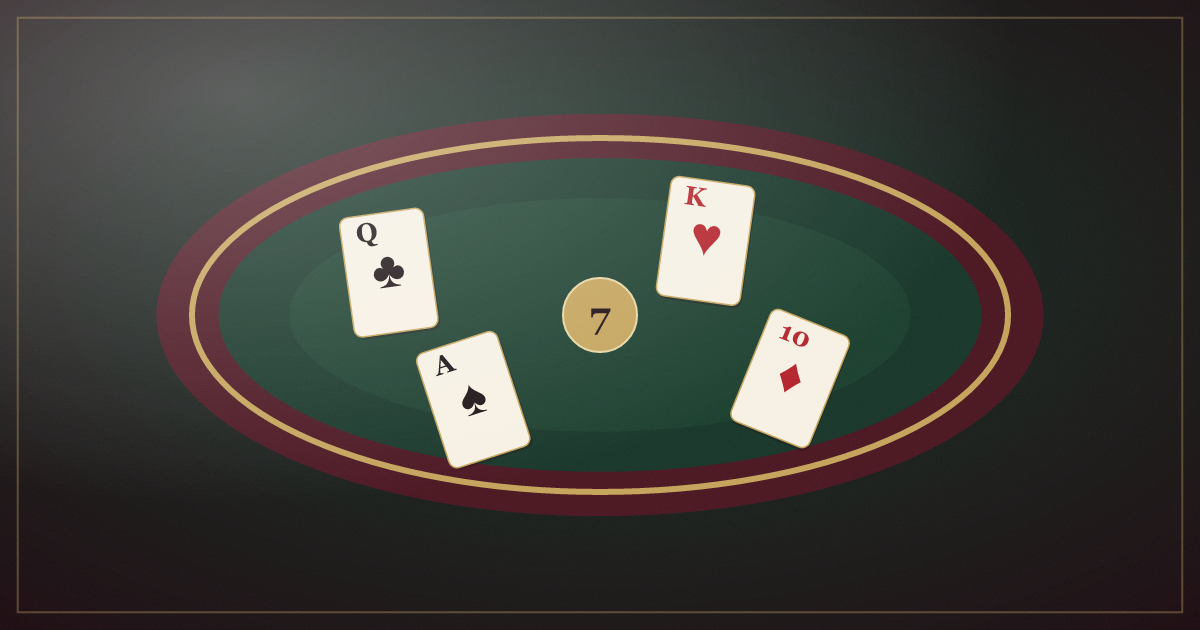
Batak tactics begin the moment you win the auction: when you draw trumps, which suit you play first and how you hand surplus tricks to someone else decide whether you make the number you bid. This guide covers the 13 tricks after the auction from both the declarer's and the defenders' point of view.
In short
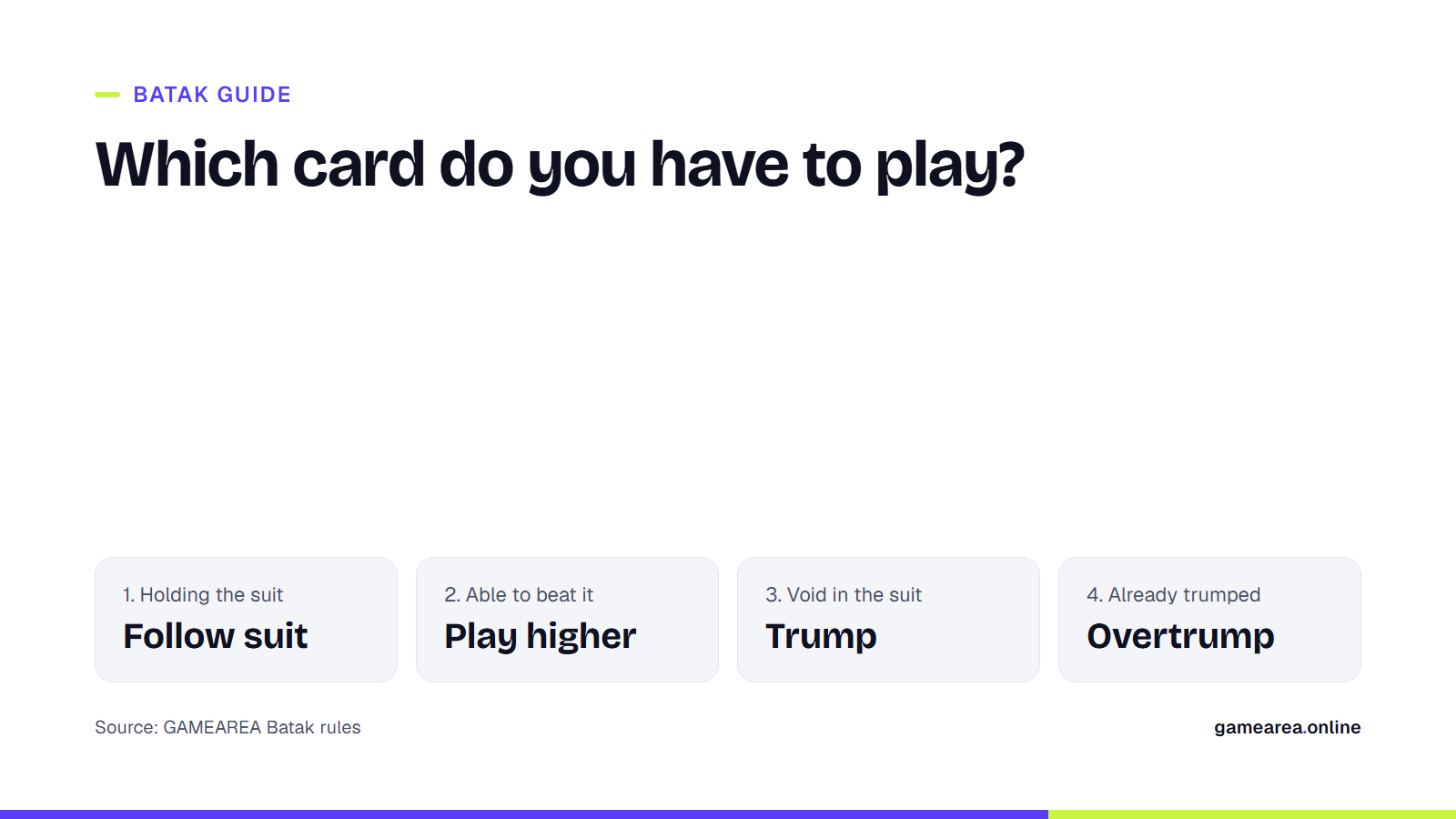
- In Batak your choice of card is limited by four obligations: follow suit, play higher if you can, trump if you are void in the suit, and overtrump if you can beat a trump already played.
- If your trumps are long and strong, pull your opponents' trumps first; only then are your aces and kings in the side suits safe.
- Thanks to the obligation to play higher, leading a middle card can knock out an opponent's ace or king early.
- A declarer who takes 3 or more tricks over their bid also goes down; in the last tricks the goal is not always to win the trick.
Which card do you have to play in Batak?
Tactics begin where you are free to choose, so you first need to know where you are not. At the GAMEAREA Batak table, the player who leads a trick can play any card. The declarer leads the first trick and may play a trump from the very first card. For the players who follow, the rules work like this:
- Follow suit: If you hold a card of the suit led, you play that suit.
- Play higher: If a card of the suit led is currently winning the trick and you hold a higher one, you must play the higher card. You cannot dodge the trick by playing a small card.
- Trump: If you have no card of the suit led and you hold a trump, you play a trump.
- Overtrump: If the trick has already been trumped and you hold a higher trump, you play it.
If none of these applies, meaning you hold neither that suit nor a trump, you play any card you like. One detail matters: once a trick has been trumped, players who follow suit no longer have to play higher, because no card of that suit can win the trick. That is your chance to avoid wasting a high card.
When should you draw trumps?
Drawing trumps means leading your own trumps to pull your opponents' trumps onto the table. Each suit has 13 cards; if you hold 6 trumps, 7 remain outside, spread across three opponents. If you hold the ace, king and queen of trumps, three rounds will collect most of them, and all of them if the split is favorable. Why does it matter? Because your ace in a side suit can be taken by even the smallest trump from an opponent who holds no cards in that suit. Once your opponents are out of trumps, your high cards in the side suits and the small cards of your long suit each turn into a trick.
There are also situations where you should put off drawing trumps:
- If your trumps are short or weak: If you start with four trumps and play three rounds, you are left with a single trump and lose control. With a hand like that, take your sure tricks in the side suits first.
- If you don't hold the top trumps: If an opponent has the ace of trumps, leading a small trump knocks out the ace but also gives up the trick. Do it when you can handle whatever that opponent plays next.
- If you are void in a side suit: When opponents lead that suit, you win tricks by trumping with your small trumps. Spend your trumps early and you lose those tricks.
How do you turn the obligation to play higher into an advantage?
Most players see the play-higher rule as a restriction, but it is also a tool for prying open an opponent's hand. Suppose you hold the queen, jack and ten of a suit, with the ace and king outside. If you lead the queen, everyone who can beat the highest card on the table when their turn comes has to do so: the player holding the king plays it if no ace has been played ahead of them, and the player holding the ace plays the ace. In the best case, your one card brings two top cards onto the table and your jack and ten become the highest cards in the suit; in the worst case the ace comes out and only the king is left.
The same rule works against you. If you hold the ace and a small card, you cannot hold the ace back when the player before you plays the king. That is why a plan to "save the ace for later" in a suit doesn't work in Batak; build your plan on the assumption that your high cards will come out early.
Playing last, on the other hand, is the most comfortable position. You can choose the smallest card that wins the trick, or throw your least valuable card if you cannot win it. So it pays to think about which opponent plays after you when you lead: if the strong opponent plays right after you, you force them to commit early.
How does the declarer manage the trick count?
On GAMEAREA, a declarer who takes between their bid and two more scores the number of tricks taken. Take fewer, or go over by 3 or more tricks, and they lose points equal to the bid. If you bid 7, your target is 7, 8 or 9 tricks; the 10th trick sinks you. We cover this in detail in our Batak bidding strategy guide.
This has two effects on the play. First, secure your number: collect your sure tricks and your trumps before opponents start emptying a suit and trumping in. Second, hit the brakes once you reach your number. You have a two-trick margin; every trick after that is a risk. In the last tricks, throw your high cards on tricks someone else has already won with a trump, or lead a small card and leave the trick to an opponent. The obligation to play higher works against you here; if you are left with nothing but high cards, you cannot avoid winning the trick. So save your small cards for the end of the hand.
What do you play on defense?
The three players who did not win the auction score one point for each trick they take; a player who takes no tricks loses points equal to the bid. The defenders' order of priorities follows from that:
- Take your own trick first. If you hold an ace and that suit hasn't been played yet, play it early; once opponents have emptied the suit, your ace falls to a trump.
- Find the declarer's short suit. If the declarer has trumped a suit, they have no cards in it. Leading that suit again forces them to spend trumps and weakens their trump control.
- Watch the count. If the declarer is below their target, try to keep them there; if they are two tricks over it, feeding them one more trick also sends them down. It is hard to plan, but the chance does come up in the last two tricks.
To keep track of which trumps are gone and who has emptied which suit, you can use the methods in our Batak card counting guide.
Frequently asked questions
Can you lead trumps on the first trick in Batak?
At the GAMEAREA Batak table, yes. The player leading a trick can play any card in their hand; the declarer leads the first trick and may start drawing trumps from the first card. Under some house rules, trumps cannot be led until a trick has been trumped; if you are playing with friends, agree on the rule before you start.
Can I play a trump when I hold the suit that was led?
No. If you hold a card of the suit led, you have to play that suit. You can trump only when you have no cards left in it; and in that case, if you hold a trump, playing one becomes compulsory and you cannot discard another suit.
Is drawing trumps always right?
No. If your trumps are long and high, drawing trumps protects your tricks in the side suits. If your trumps are short, if opponents hold the top trumps, or if you are void in a side suit and plan to trump it, holding on to your trumps usually brings more tricks.
Why does the declarer sometimes avoid winning tricks?
Because taking 3 or more tricks over your bid also counts as going down. A player who bids 6 and takes 9 tricks loses 6 points. A declarer who is already two tricks over their number leads small cards in the remaining tricks to try to leave them to the opponents.
Sources
- GAMEAREA — Batak Oyna Official source
- GAMEAREA — Batak Nasıl Oynanır: İhale, Koz ve Puanlama Official source
- Pagat.com — Card games in Turkey
How this content was prepared
Prepared with AI assistance from the sources listed, key facts checked against official sources, not copied verbatim. Our AI principles
GAMEAREA Editörlüğü