The Cultural History of Tavla and Okey in Turkey
Tavla and okey are not seasonal content. In Turkey they are how a table fills: two people and a pair of dice, or four people and a rack of tiles, with glasses of tea doing the rest of the hosting. Understanding that social job explains why both games still feel right online — as long as the digital table keeps the rules honest and does not invent a casino around them.
This is a cultural sketch, not a museum catalog. Dates that scholars still argue about will not be nailed down here for SEO. What is not in dispute: race-and-hit dice games in the backgammon family are ancient across the Mediterranean and Near East, and tavla is the living Turkish table for that family. Okey is younger, a 20th-century Turkish rummy in tile form, built for four seats. GAMEAREA’s live boards are Tavla, Okey 101, plus Düz Okey and Okey 51 for the sibling rules people actually argue about at home.
Tavla: the long dice table
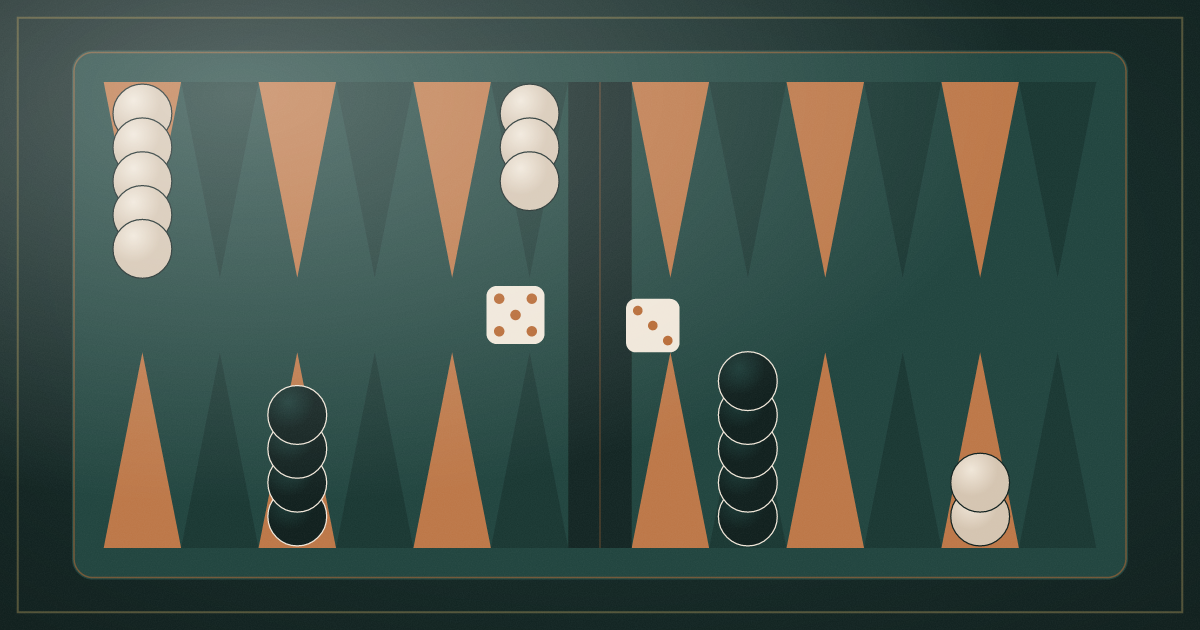
Games with two dice, fifteen pieces, and a race around a divided board show up in the archaeological and written record for millennia. Roman tabula, later European backgammon, Persian nard — the family is older than any app store. Turkish tavla sits in that family as a daily object: the board that lives in a kahvehane, a holiday house, a student dorm, anywhere two people can sit without a referee.
The culture is not “quiet concentration.” It is talk, needling, the next glass of çay, a hit celebrated louder than it deserves, a dance on the bar treated as personal betrayal. Doubles still explode into four moves. Blots still get hit. Bearing off still requires the whole army home. If you need the legal list, use the tavla rules guide. The cultural fact is that those rules survived because they support an argument that can last longer than the game.
Coffeehouse play also explains why online tavla works when it is fast to start and strict about legality. Nobody wants to police whether a cousin played both dice. A server that refuses an illegal bear-off is, in a boring way, the fairest elder at the table.
Okey: four racks, one conversation
Okey did not need to be ancient to become national. Tile rummy with an indicator-defined wildcard (the okey) fitted the same social slot tavla already occupied, except it wants four. That matters. Two-player games can be a duel. Four-player okey is a small party: side comments, discarded tiles as public news, the slow horror of watching someone else assemble a run you needed.
Closed-hand Düz Okey is the quieter cousin: everything stays on the rack until someone goes out. Open-table 101, GAMEAREA’s flagship, is louder: you open at 101 (or five pairs), side-take into that opening, then the table becomes communal furniture. Okey 51 lowers the first bar. Families pick a variant and then defend it as if it were geography. If you learned one at a relative’s house, you will call the others “wrong” for a year. They are not wrong. They are different doors. See how to play okey before you mix 21-tile 101 habits into a Düz room.
Worked example: Saturday in two rooms
Afternoon: two cousins, one tavla board, a running pip-count argument that neither of them is actually counting. Someone hits a blot on the 5-point and immediately regrets the return shot. Evening: four people, okey tiles, someone side-takes a yellow 10 and the table groans because everyone saw it coming except the person who threw it. Same household, two rule families, one social technology: a reason to sit without a television agenda.
Online, that Saturday splits across cities. Private rooms on GAMEAREA exist so the cousins still share a code instead of a physical board. Ranked queues exist so a stranger can sit where a cousin is missing. Neither mode replaces the tea. Both keep the rules from dissolving into house variants you cannot remember on Monday.
Why the digital table did not kill them
Clear win conditions, finite equipment, and enough hidden information to stay interesting after a thousand hands — that combination survives a format change. What dies online is the clatter, the smell of the shop, the person who always drops a tile. What must not die is the legality of a move. Server-verified turns are the unromantic reason these games still feel like themselves.
If you want tactics after culture, read tavla strategy and okey discards. If you want the board, sit down: play Tavla or play Okey 101 in the browser. Four seats, bots when the table is short, no need to claim a player-count trophy this article does not have.
Which table to open when the family chat says “okey”
That word is doing too much work. Ask one question before you create the room: do we lay melds on the table mid-hand?
- If nobody ever did — closed-hand, everything on the rack until someone goes out — you want Düz Okey. Read the closed-hand guide so nobody tries a 101 open in this room.
- If the household opened but the bar was lower than 101 — four pairs or 51 face — sit in Okey 51 and keep how to open at 51 nearby for the first night.
- If they talk about 101, side-take, katlamalı — that is the flagship Okey 101 table.
Families defend a variant as if it were a hometown. Online, the kindest move is to name the variant in the chat before the first draw. The engine will not translate a Düz habit into a 101 open. That is a feature. It keeps the kitchen argument from becoming an illegal-move argument.
Diaspora nights and what the digital table must keep
Cousins in different cities do not share a kahvehane. They share a code. Private rooms exist for that Saturday-split: tavla for two while you wait, okey when the fourth arrives, bots only as a spare chair. Ranked queues exist for the night when nobody in the family is awake and you still want a person who hits blots. Neither mode owes you the smell of the shop. Both owe you the legality of a move — re-entry before anything else, bear-off only when all fifteen are home, opens that actually meet the bar.
Common mistake: importing café stakes into a product that does not run money tables. GAMEAREA’s okey penalty series in bot and private rooms is in-game score only. Another: calling the other variant “wrong” instead of switching rooms. A third: teaching a first-timer 101 and Düz in the same hour. Pick one social job for the night. Dice and two seats, or tiles and four. The tea, you still have to make yourself.
Frequently asked questions
Is tavla uniquely Turkish?
The backgammon family is regional and ancient. Tavla is the Turkish table, name, and café culture for that family. You can learn the same movement rules as “backgammon” and still be playing tavla when the room is speaking Turkish.
Is okey just rummy with tiles?
It is in the rummy family, with a Turkish tile set, an indicator wildcard, and — on GAMEAREA — open-table 101 as the flagship, plus Düz and 51. Four players is the social unit, not a pair of hands of cards.
Which okey should I play if my family never “opened”?
That sounds like closed-hand Düz Okey. Try it first, then look at 101 if you want public melds and a 101 bar.
Do these games involve stakes on GAMEAREA?
No. Optional 11-hand penalty series in okey bot/private rooms are in-game score only. Ranked play is game results, not a money table.
Where do I play tonight?
Open Tavla for two, or Okey 101 for four. Private rooms if you have people; matchmaking if you do not.