How to choose a gaming headset: drivers, 2.4 GHz vs Bluetooth, mic and spatial audio
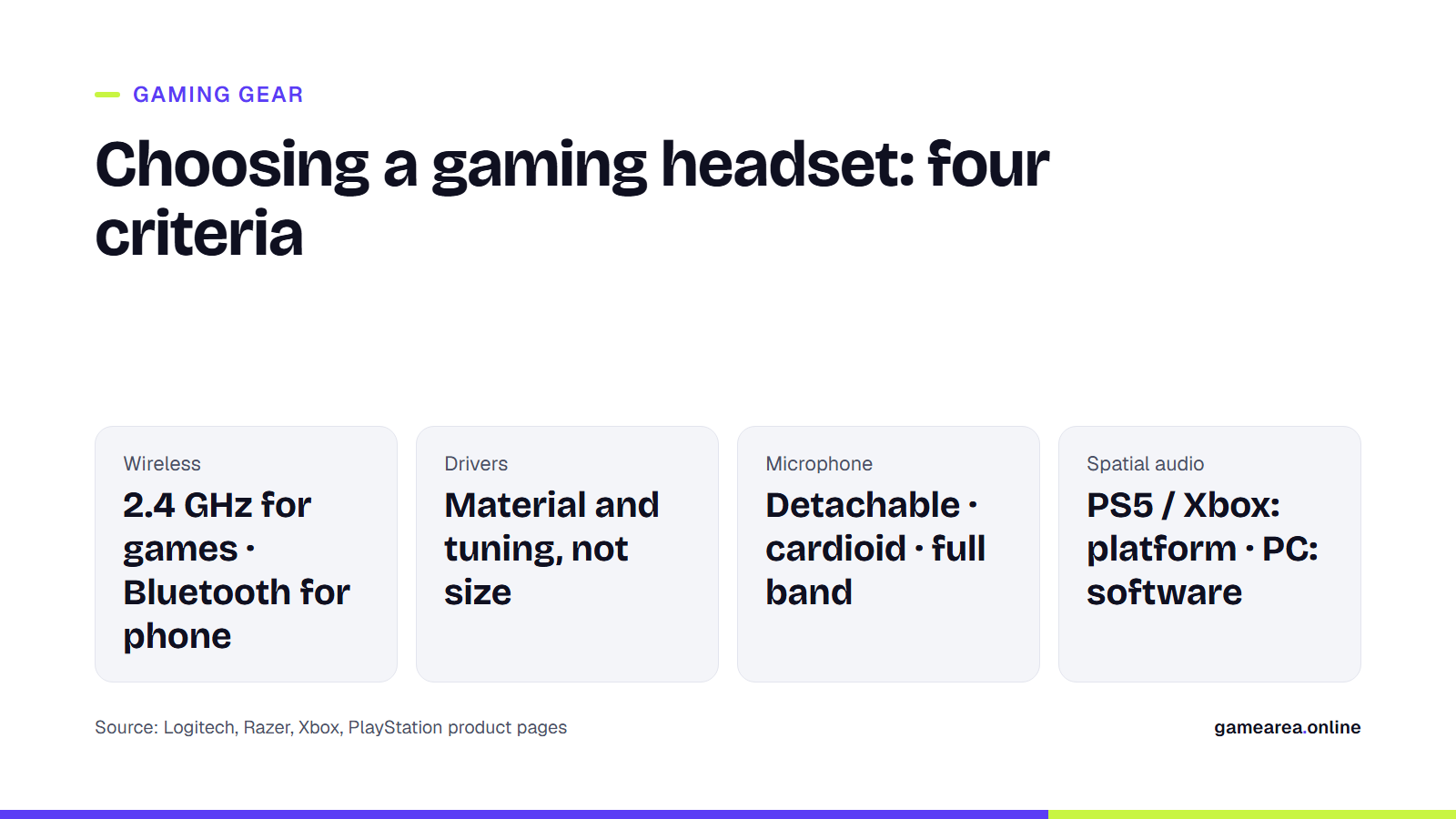
When you shop for a gaming headset, "7.1" and "ultra-low latency" on the box tell you very little. Four things decide the purchase: the drivers and sound tuning, the kind of wireless link, the microphone, and where spatial audio actually comes from on your platform.
In short
- A 2.4 GHz USB dongle is still the lowest-latency wireless path for games; Bluetooth is useful as a second link for your phone and music, not as the main game connection.
- A 50 mm driver is not a quality measure on its own; diaphragm material (graphene, bio-cellulose, planar magnetic) and the manufacturer's tuning shape the sound.
- On consoles spatial audio comes from the platform, not the headset: 3D Audio on PS5, Windows Sonic / Dolby Atmos / DTS on Xbox; on PC it needs the manufacturer's software.
- Battery figures are best-case manufacturer measurements, anywhere from 20 to 70 hours; ANC and RGB cut them down.
Wireless: 2.4 GHz or Bluetooth?
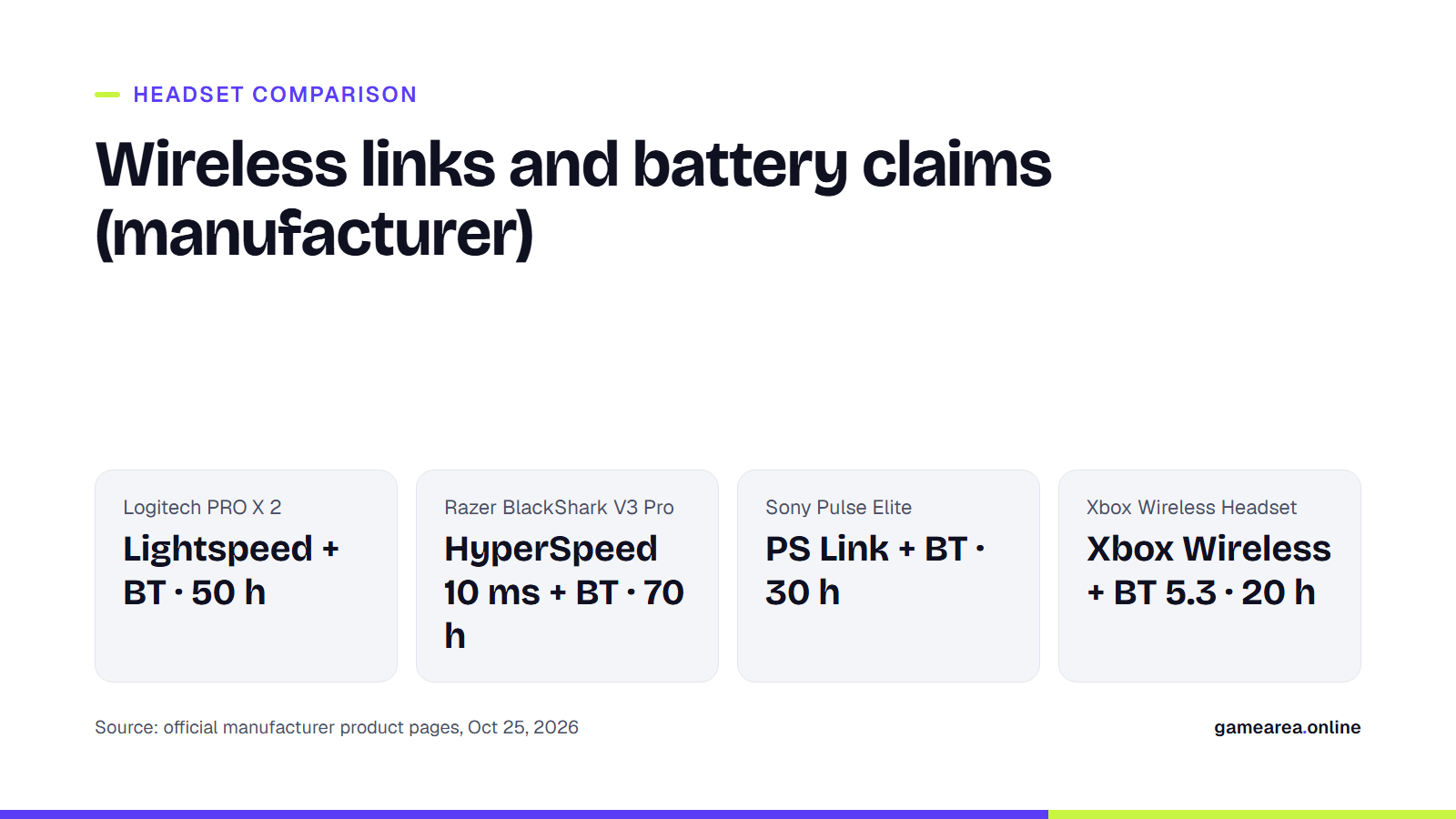
Gaming headsets carry two separate wireless paths. The first is the 2.4 GHz link through the USB dongle in the box; Logitech calls it Lightspeed, Razer HyperSpeed, Sony PlayStation Link. Its advantage is latency: Razer quotes as little as 10 ms for the BlackShark V3 Pro, and Sony describes PlayStation Link as lossless and ultra-low-latency. Footsteps and gunfire landing in sync with the picture depend on this link.
Bluetooth is the second path. Classic Bluetooth audio (A2DP) runs on codecs such as SBC and adds noticeable delay for games; even Microsoft's Xbox Wireless Headset uses SBC on its Bluetooth side. The Bluetooth SIG's LE Audio standard and its LC3 codec promise better quality at lower bit rates, but the specification page gives no latency figure. The practical rule: run the game over 2.4 GHz and take calls or music over Bluetooth. Current models from Razer, Sony and Microsoft keep both links open at once.
What do drivers and tuning change?
Most gaming headsets use 40 or 50 mm dynamic drivers. Diameter alone does not set the sound; diaphragm material and the manufacturer's tuning do. The Logitech PRO X 2 uses a graphene diaphragm, the Razer BlackShark V3 Pro a bio-cellulose diaphragm with a magnet 75 percent stronger than the previous generation, and Sony's Pulse Elite replaces the dynamic driver with a planar magnetic one. Microsoft's Xbox headset has 40 mm paper-composite drivers rated 20 Hz to 20 kHz.
The "more bass" reflex usually misleads for games. In competitive titles footsteps and distance cues live in the mids and upper mids, and heavy bass masks them. That is why EQ presets in the manufacturer's software matter: a good headset offers genre-based profiles and lets you save your own curve rather than a single "game mode".
Microphone: detachable, and how wide a band?
In team games the microphone matters as much as the speakers. Look at three things. Type: a detachable boom (Logitech, Razer) suits people who also wear the headset outside; a retractable mic (Sony Pulse Elite) cannot be lost. Pattern: Logitech's cardioid capsule picks up your voice from the front and rejects keyboard noise and room echo. Bandwidth: Razer calls its 12 mm capsule "full band", meaning your voice is transmitted over a wider range than telephone quality.
Noise rejection is increasingly AI-based; Sony describes the Pulse Elite's as AI-based noise rejection and Logitech offers Blue VO!CE filters. Mic monitoring (sidetone) plays your own voice back into the cups so you do not shout in a closed-back headset.
Spatial audio: the headset or the platform?
"7.1" on the box does not mean seven physical speakers; it means virtual positioning calculated over two drivers. Who does the calculating depends on the platform. On PS5 spatial sound comes from the console's own 3D Audio engine and works with any stereo headset. On Xbox, Windows Sonic is free, Dolby Atmos for Headphones costs nothing extra with Microsoft's own headset, and DTS Headphone:X may need a separate app and licence. On PC the job falls to the manufacturer's software: Razer's THX Spatial Audio 7.1.4 requires Windows 11 23H2 or later and is enabled through Synapse.
Conclusion: for a console player the headset's "spatial audio" label hardly matters, since the platform engine already runs. A PC player should check whether the manufacturer's software is still maintained.
Battery and weight: which numbers to trust
Manufacturer battery figures are best-case measurements: Microsoft says up to 20 hours, Sony up to 30, Logitech up to 50, Razer up to 70. Active noise cancelling, RGB lighting and high volume shorten them. Fast-charge numbers are a more useful comparison: Sony gives 2 hours of use from 10 minutes, Microsoft 4 hours from 30 minutes, Razer roughly 6 hours from 15 minutes.
Around 300 grams is typical; Microsoft's headset is 320 grams. For long sessions the headband's weight distribution and the ear-pad material (fabric or leatherette) matter more than the weight itself.
| Model | Wireless | Battery (manufacturer) | Spatial audio |
|---|---|---|---|
| Logitech G PRO X 2 Lightspeed | Lightspeed 2.4 GHz + Bluetooth + 3.5 mm | Up to 50 h | 7.1 (PC software) |
| Razer BlackShark V3 Pro | HyperSpeed Gen-2 (10 ms) + Bluetooth, simultaneous | Up to 70 h | THX Spatial 7.1.4 (Win 11 23H2+) |
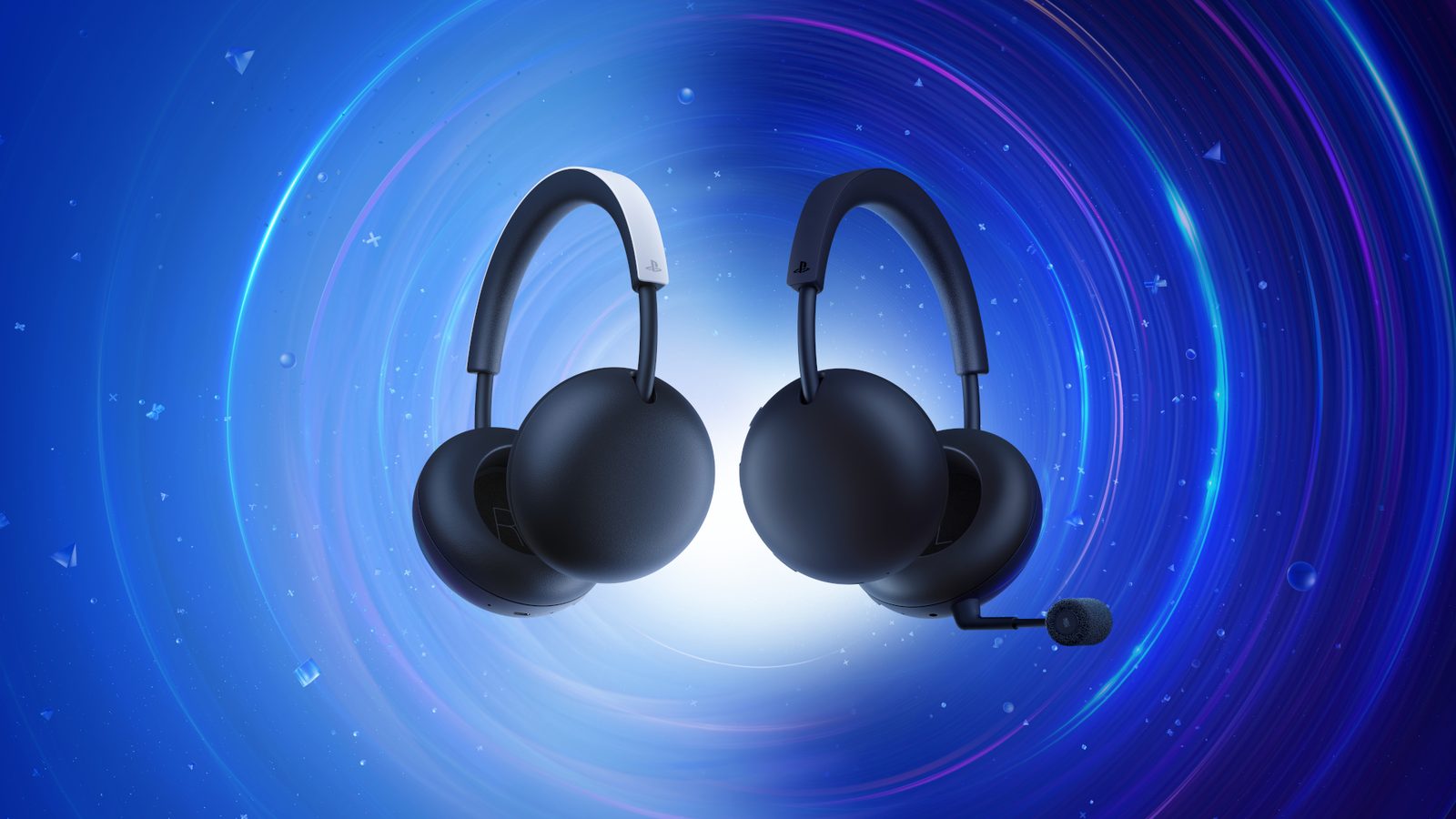
| Sony Pulse Elite | PlayStation Link + Bluetooth, simultaneous | Up to 30 h | PS5 3D Audio |
| Xbox Wireless Headset | Xbox Wireless + Bluetooth 5.3 (SBC) | Up to 20 h | Windows Sonic, Dolby Atmos, DTS |
| Source: official manufacturer product pages, October 25, 2026. US list prices: Logitech $229.99, Razer from $249.99; the Sony and Microsoft pages show no price. | |||
For the criteria on the rest of the desk, see our guides on gaming mice, gaming keyboards and gaming monitors.
Frequently asked questions
Is a Bluetooth headset enough for gaming?
For single-player and relaxed games, yes; for competitive play a 2.4 GHz dongle or a cable is safer on latency. Classic Bluetooth audio codecs add noticeable delay.
Do I need a 7.1 headset?
No. PS5 and Xbox generate spatial audio with their own engines on any stereo headset. On PC the label only means something while the manufacturer's software works.
Does a console headset work on PC?
Mostly: Sony's Pulse Elite supports PC and Mac over PlayStation Link, and Microsoft's headset supports Windows. Xbox-licensed headsets do not work on PS5, and PlayStation Link headsets do not work on Xbox.
Why does the battery last less than the box says?
Manufacturer figures are measured with ANC and RGB off at moderate volume. Turning those on shortens runtime considerably.
Sources
- Logitech G — PRO X 2 LIGHTSPEED Wireless Gaming Headset Official source
- Razer — Razer BlackShark V3 Pro Official source
- Microsoft / Xbox — Xbox Wireless Headset Official source
- Sony Interactive Entertainment — PULSE Elite wireless headset Official source
- Bluetooth SIG — LE Audio Official source
How this content was prepared
Prepared with AI assistance from the sources listed, key facts checked against official sources, not copied verbatim. Our AI principles
GAMEAREA Editörlüğü