Reversi openings: perpendicular, diagonal and parallel; why flipping fewer discs early wins
A Reversi opening does not start with long memorised lines as in chess, but with a few solid principles. Black's four options on the first move are symmetrically identical; the character of the game is set by the direction White chooses on the second move and by how many discs you flip in the moves that follow.
In short
- At the start Black has four legal moves, and because of the board's symmetry they all lead to the same position.
- White's three replies on the second move are called the perpendicular, diagonal and parallel openings; in expert games perpendicular and diagonal are the most common.
- Flipping lots of discs in the opening is not an advantage: it gives your opponent more moves and pushes you toward the edges.
- A good opening move flips few discs, stays in the center and narrows your opponent's options.
Why doesn't the first move in Reversi matter?
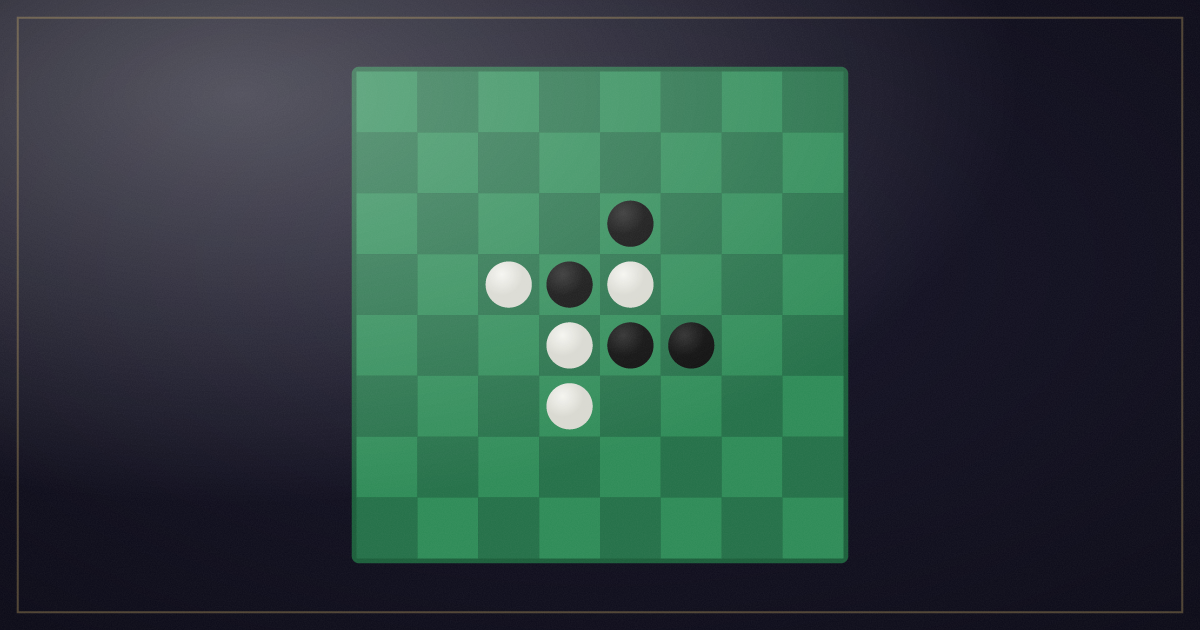
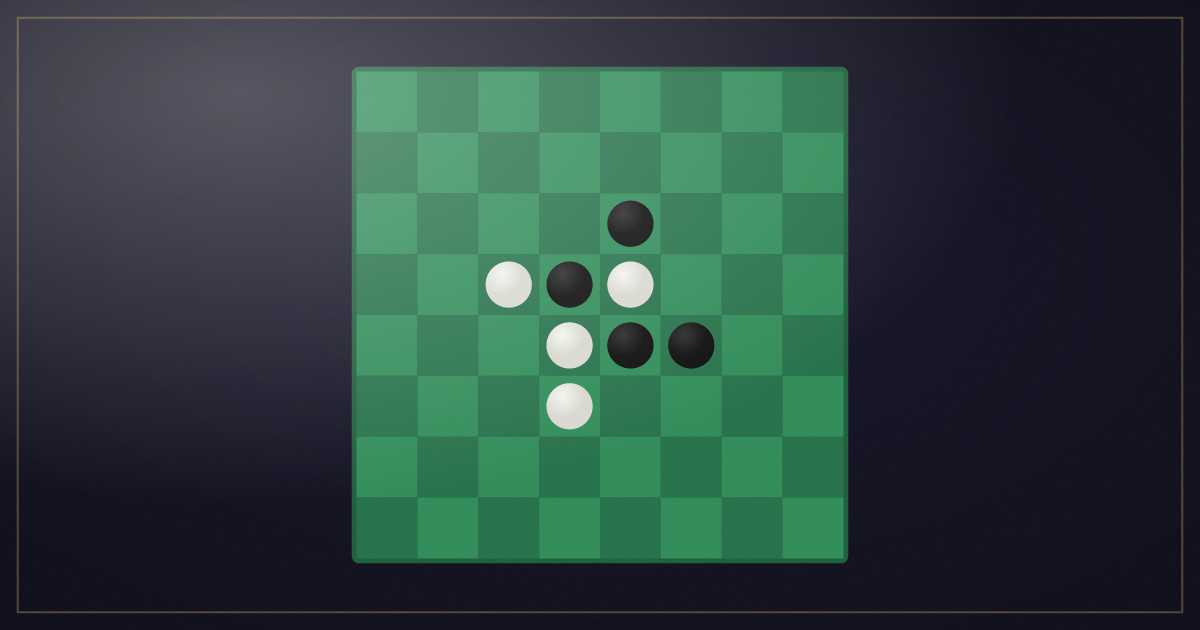
The game starts with two black and two white discs placed diagonally on the four central squares. In this position Black has four legal moves: d3, c4, f5 and e6 in standard notation. Relative to the center of the board, these four moves are mirror images or rotations of one another, so whichever one you play, the resulting position is the same. That is why opening analysis usually takes f5 as the starting move, and the real choice begins with White's reply.
What are the perpendicular, diagonal and parallel openings?
After f5, White has three legal replies. They are named after the direction in which White flips a disc, compared with the direction of Black's first move. With f5 Black flipped the disc on e5 horizontally, and White's replies are classified accordingly:
| White's move | Name | Direction of the flip | General assessment |
|---|---|---|---|
| d6 | Perpendicular | Vertical, at right angles to Black's direction | One of the most common choices in expert games |
| f6 | Diagonal | Diagonal | Common in expert games, solid |
| f4 | Parallel | Horizontal, parallel to Black's direction | Considered weak because it leaves Black an easier game |
| Source: British Othello Federation opening guide; standard Othello starting position | |||
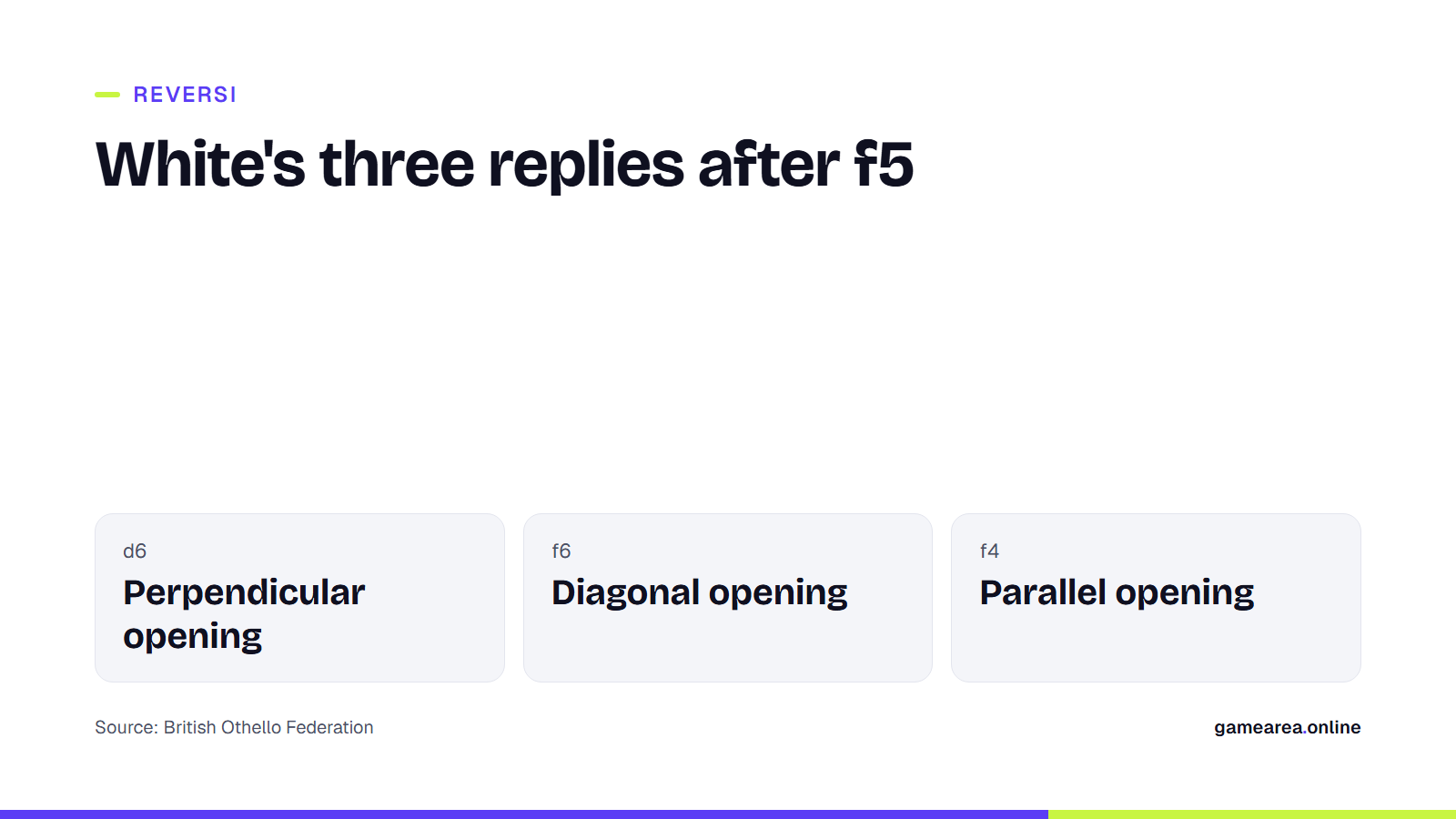
The parallel opening is considered weak because it makes it easier for Black to find a quiet, strong continuation in the center on the next move. It is not a losing move, but between two players of the same level it starts White off at a small disadvantage. The practical advice for beginners is to choose the perpendicular or diagonal reply when playing White.
Why should you flip few discs in the opening?
This is the most counter-intuitive rule in Reversi: having lots of discs on the board in the middle of the game is not a good sign. The more discs you have, the more discs your opponent can flip, which means the more moves they can make. The side with more discs, by contrast, is left with few options and before long has to play on squares it does not want, especially the squares next to the corners. This is the opening version of mobility, the concept we explain in our guide to corners and mobility.
So a good move in the opening is usually one that flips one or two discs, stays in the central area and does not create discs next to new empty squares (frontier discs). Moves like this are called quiet moves. A quiet move gives your opponent no new targets; it keeps their options down while increasing yours.
Why are frontier discs and walls dangerous?
Discs next to an empty square are called frontier discs. The more frontier discs you have, the more squares your opponent can play on by flipping them. Building a long line of discs in one direction in the opening, a wall, usually backfires: the back of the wall stays closed to your opponent, while the front offers them countless moves. Keeping your discs compact and on the inside in the center forces your opponent to play outward, toward the edges.
A short checklist helps: How many discs does this move flip? Does it create new frontier discs? Which new squares does it open up for my opponent? Your answers to these three questions point to the right move in most opening positions.
Is the result of perfect play in Reversi known?
A computational study published in 2023 claimed that standard 8×8 Othello ends in a draw when both sides play perfectly. This makes no practical difference to games between humans; small mistakes in the opening can still decide the endgame. We explain how to handle the end of the game in our Reversi endgame guide, and you can open the Reversi game to try the principles out.
Frequently asked questions
Are Reversi and Othello the same game?
Almost. Othello uses a fixed starting position with the four central discs placed diagonally, and most versions of Reversi played online today use the same start and rules.
What is the best opening move?
The four options for the first move are equivalent. For White, the perpendicular and diagonal replies are considered more solid than the parallel one; in the following moves, look for quiet moves that flip few discs.
Why is flipping lots of discs bad?
As your disc count grows, your opponent's options increase and yours shrink. Disc count is what wins at the end of the game, but to get there you need to keep your options open in the middle.
Do I need to memorise openings?
Not at beginner and intermediate level. The principles of flipping few discs, staying in the center and avoiding frontier discs prevent most opening mistakes.
Sources
- GAMEAREA — Reversi Oyna — GAMEAREA Official source
- British Othello Federation — Introduction to openings Official source
- Wikipedia — Reversi
How this content was prepared
Prepared with AI assistance from the sources listed, key facts checked against official sources, not copied verbatim. Our AI principles
GAMEAREA Editörlüğü