What is a gammon in backgammon and how do you avoid it? Backgammons, points and playing for the gammon
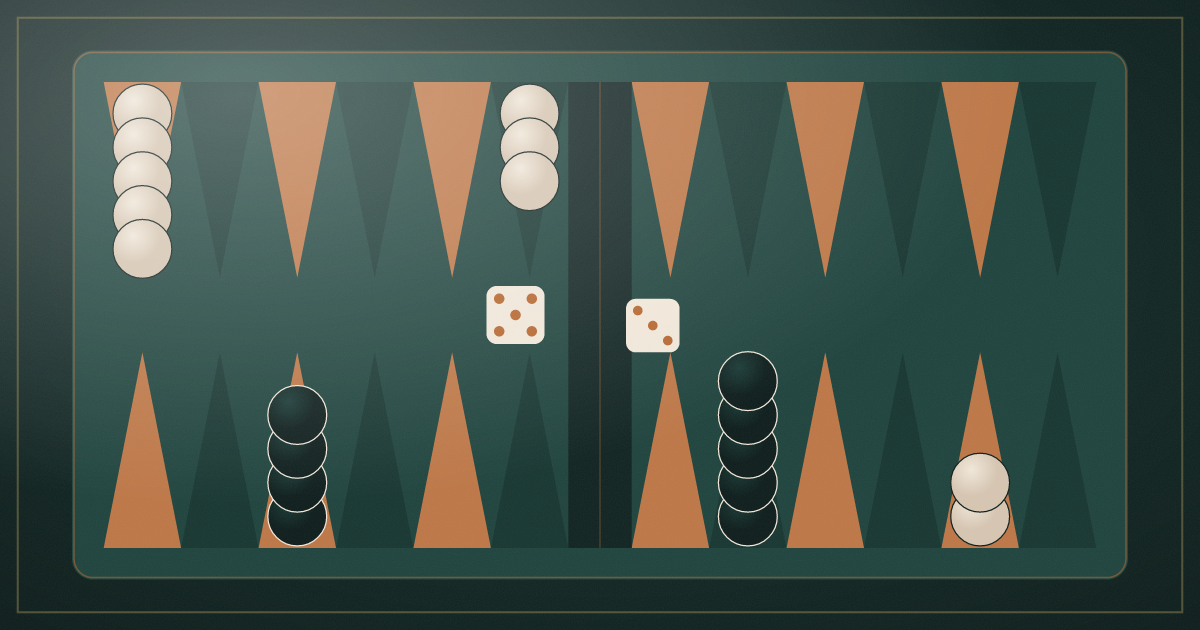
Losing a game of backgammon costs you one point; getting gammoned costs two. Because matches are played to a set number of points, avoiding a gammon or gammoning your opponent is often as important as winning or losing the game itself.
In short
- If you bear off all your checkers before your opponent has borne off a single one, your opponent is gammoned and the game is worth two points.
- If the gammoned player still has a checker on the bar or in the winner's home board at that moment, it is a backgammon and the game is worth three points.
- If a doubling cube is in use, these points are multiplied by the value of the cube.
- Once it is clear you are losing, the priority is to bring your rearmost checkers home and bear off at least one checker.
When does a gammon happen in backgammon?
A game ends when one player has borne off all 15 of their checkers. If the losing player has borne off at least one checker by then, it is a single game and is worth one point. If the losing player has not yet borne off any checkers, they are gammoned. Since you can only start bearing off once all 15 checkers are in your home board, a gammon usually happens to a player who still has some checkers outside or has a checker on the bar.
A backgammon is the more severe version of a gammon: if the gammoned player has a hit checker on the bar when the game ends, or still has a checker in the winner's home board, the game counts as three points. The backgammon is a standard part of the international rules, but not every table plays it, so it is worth agreeing on it in advance when you play with friends. In backgammon on GAMEAREA, all three results are scored separately.
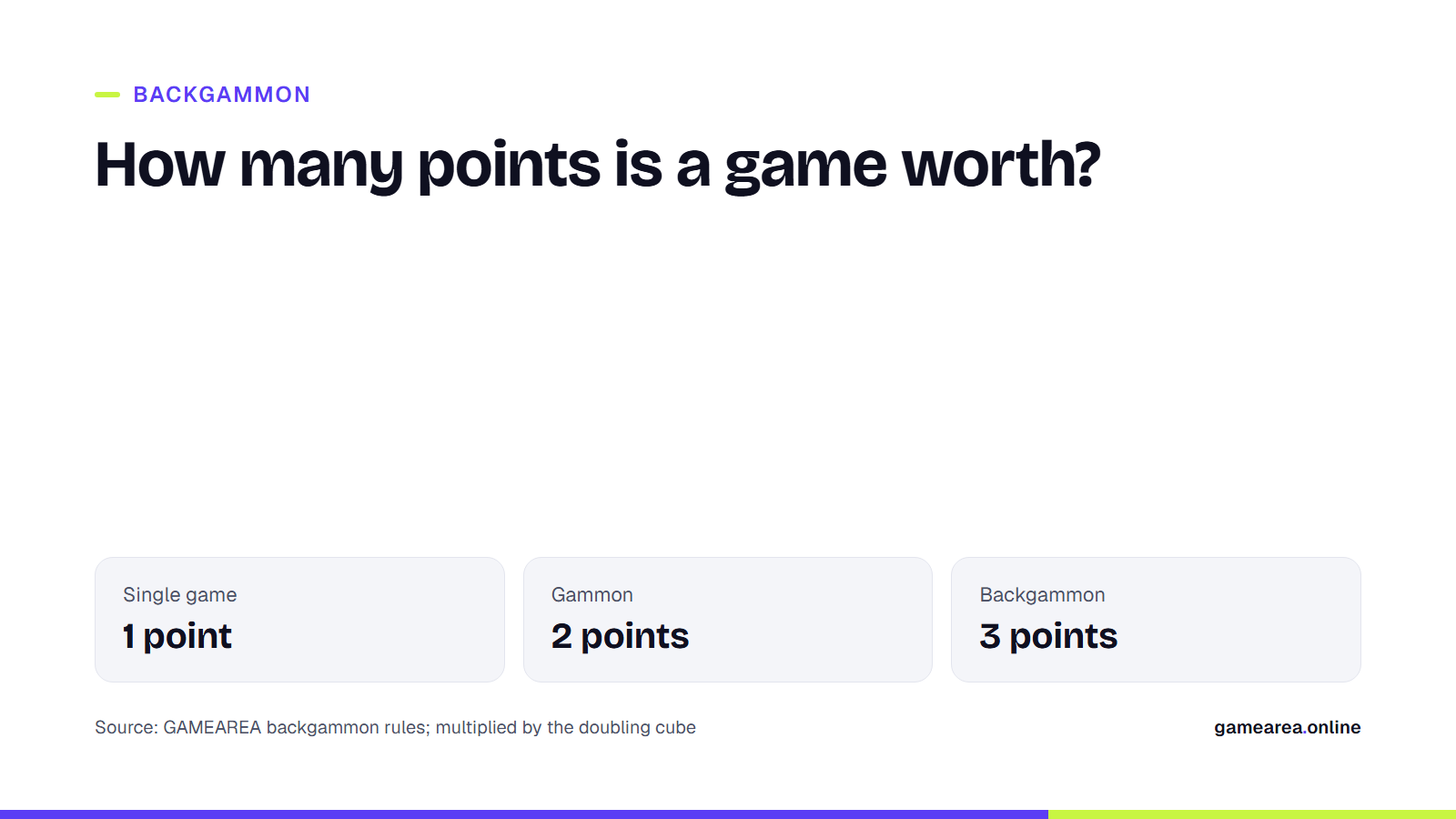
| Result | Condition | Points |
|---|---|---|
| Single game | The loser has borne off at least one checker | 1 |
| Gammon | The loser has not borne off any checkers | 2 |
| Backgammon | No checkers borne off and a checker on the bar or in the winner's home board | 3 |
| Source: GAMEAREA backgammon rules; if a doubling cube is used, points are multiplied by the value of the cube | ||
How does the doubling cube affect gammons?
In games that use a doubling cube, the value of the game is multiplied by the number the cube shows. With the cube on 2, a gammon is worth four points and a backgammon six. So when you accept a double, you have to take into account not only your chances of winning the game but also your risk of being gammoned: even if your winning chances look reasonable, a double is far more expensive than you expect if most of your losing scenarios end in a gammon.
How do you save the gammon when you are losing?
When there is no realistic way left to save the game, you need to change your goal: the aim is no longer to win but to bear off at least one checker. A few practical rules help:
- Give priority to your rearmost checkers. To bear off, all 15 checkers must be in your home board. Use your rolls to move the furthest checkers first; shuffling checkers already in your home board does nothing to prevent the gammon.
- Leave your anchor in time. A point you hold in your opponent's home board gives you shots, but if your opponent is bearing off safely, that anchor increases the gammon risk. Once the chance of a hit fades, start running your back checkers.
- Bring a hit checker in quickly. A checker left on the bar brings both the gammon and the backgammon closer. If your opponent's home board has an open point, entering the hit checker comes before everything else.
- Keep track of the pip count. Compare the pips you need to bring all your checkers home with the number of rolls your opponent needs to bear off their remaining checkers. A pip count lets you see the outcome of this race in advance.
When should you play for a gammon?
It is not right to push for a gammon in every game you lead; playing for a gammon often slightly increases the risk of losing the game. Playing for a gammon makes the most sense when your opponent has more than one checker hit or stuck behind your position, when you have made four or more points in your home board, and when your opponent is not yet close to home.
In these positions, hitting a second checker keeps your opponent on the bar and raises the chance of a gammon considerably. Waiting without breaking your points, so that the hit checker struggles to come in, serves the same goal. We explain when to keep your points and when to break them in our prime strategy guide. In the bear-off itself, do not rush: if your opponent's checkers are still in your home board, focus first on bearing off safely and not leaving blots; a single hit can turn the game around.
Frequently asked questions
How many points is a gammon worth?
A gammon is worth two points and a backgammon three. If a doubling cube is in use, these values are multiplied by the number on the cube.
Does bearing off one checker save the gammon?
Yes. If the losing player has borne off even a single checker before the game ends, the result is a single game and counts as one point.
Is the backgammon counted in every game?
Not every table plays it, so agree on it in advance when you play with friends. Under the international rules and in backgammon on GAMEAREA, a backgammon counts as three points.
When should I give up on winning to avoid a gammon?
When your opponent starts bearing off safely and you have almost no chance of a hit left. From that point on, use your rolls to bring your rearmost checkers home.
Sources
- GAMEAREA — Tavla Oyna — GAMEAREA Official source
- Vikipedi — Tavla
- Wikipedia — Backgammon
How this content was prepared
Prepared with AI assistance from the sources listed, key facts checked against official sources, not copied verbatim. Our AI principles
GAMEAREA Editörlüğü